Wisdom is one of many human mental capabilities. Mental vitality is stereotypically associated with youth and mental decline with old age. However, also aging is a price of wisdom. The connection between neurological decline (senility, dementias) and wisdom development during aging is referred to as the paradox of wisdom. The prejudice about the leading and synthetic role of philosophy is worsening the development of interdisciplinary research. Information science without (neuro)psychology is not even possible as science since information phenomena, processes and structures have solid brain (anatomical and physiological) and mental foundations. No human mental capability, including perception, is possible without memory and patterns recognitions. A pattern stored in the memory of the brain works as an attractor so that even small parts of neural network automatically fully revive the relevant memory condition.
In the spring of 2025, the Slovenian Research and Innovation Agency (ARIS) conducted a survey on the implementation of open science principles, to obtain the data to assess the enforcement of open science in the practices of research organizations in 2024.
The aim of this paper was to subject-index a corpus of contemporary Croatian proverbs using denotative (literal) and connotative (figurative) terms, and to develop a dual thesaurus for searching on the Croatian Proverbs Portal.
Web archives are collections produced by libraries and other heritage institutions to permanently preserve online heritage. They often contain large amounts of material stored from the web through the use of web crawlers. From a usage perspective, they are often unpredictable, non-transparent and inconsistent data sources that contain numerous content gaps.
This article provides an overview of computer-based catalogue systems designed for use by library clients, seeing present day discovery systems on the same trajectory as the older online public access catalogues (OPACs) which they are gradually replacing, both in technical development and their approach to client use scenarios. It traces the history of the OPAC/discovery system from its origins in the library automation of the 1960s through to the present and discusses the main technical standards which have formed its development.
The paper presents the contributions of participants at the consultation on scientific and professional publications on e-journals at the beginning of the 1990s, which was organised at the Institute of Information Science (IZUM) in Maribor in December 1991. The emphasis is also placed on IZUM's e-bulletin, which was entered into one of the first directories of e-journals and other e-bulletins worldwide from the same year. Communication is the essence of scientific progress, particularly e-journals.
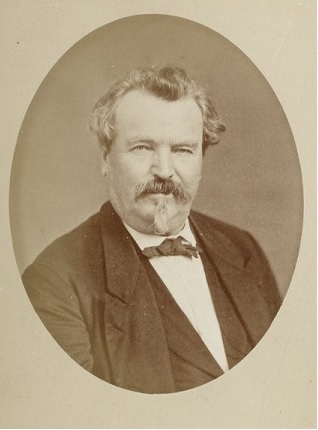
The literature review is an integral part of research. The story of Pierre Trémaux (1818–1895) illustrates how factors, such as hoaxes, fabrications, untrue stories, myths and prejudice, which have nothing to do in science, difficulties in comprehending and accepting new scientific paradigms and also slow and geographically limited dissemination of scientific findings, which results in not being familiar with scientific findings and discoveries elsewhere in the world, are harmful for the ecology of scientific communication.
The emergence of information and technology anthropology, and cyborg anthropology at this point runs along a side route. Anthropology of information and technology is the use of the anthropological approach in information science and vice versa, information science should be one of the most important anthropological sciences.
The first part of the article focuses on the semiotic perspective of information theory, the second part, however, is based on the mathematical model of epidemiology or on the notion that information spreads like an infectious disease. This opens up a broad field of information and communication ecology.
The paper presents the situation in Serbian village libraries. It also points out that these libraries do not keep pace with the development of library and information activities in Serbia and that among their users, similar to those in public libraries in cities, there is only a small number of farmers.
We use cookies to ensure that we give you the best experience on our website. If you continue to use this site we will assume that you are happy with it.