Library catalogues allow users searching of library materials in different ways. To achieve successful and efficient searching, bibliographic and authority records should be created according to cataloguing rules, besides perfect and accurate records are required. That is why, cataloguers are responsible for an adequate quality of records and the quality control should be regularly examined. Results of quality control of records in COBIB taking place since 2005 indicate that the number of records containing catalogue failures is much higher than the number of perfect records. Three similar researches conducted by the Department of Library and Information Science and Book Studies at the Faculty of Arts in 2010 and 2011 are presented. Research on the use of uniform title in COBIB and CROLIST is also discussed.
The paper discusses challenges in the development of UNIMARC as an encoding standard for metadata content that conforms to the stipulations of ISBD for Manifestation, an implementation of the IFLA Library Reference Model. UNIMARC already encodes metadata controlled by ISBD: International Standard Bibliographic Description, the precursor of ISBD for Manifestation.
In Bosnia and Herzegovina, in 1945, the Decree on Mandatory Delivery of Printed Matters in Bosnia and Herzegovina and the Decree on the National Library of Federal Bosnia and Herzegovina were passed, which laid the legal foundations for creating a Bibliography of Bosniaca. Later in B&H, following the foundation of the B&H Library Association in 1955, the first B&H librarianship journal, the Bulletin of the B&H Library Association and the National Library of the People's Republic of B&H was launched, where the journal was first renamed to Librarianship: Journal of the B&H Library Association and then to Librarianship: Yearbook of the B&H Library Association.
The article presents in detail the data on the annual increment of bibliographic records in 2022 at annual and monthly levels. The analysis includes 171,503 bibliographic records created by 546 cataloguers. In the last quarter of the year, 27.5% of bibliographic records were created.
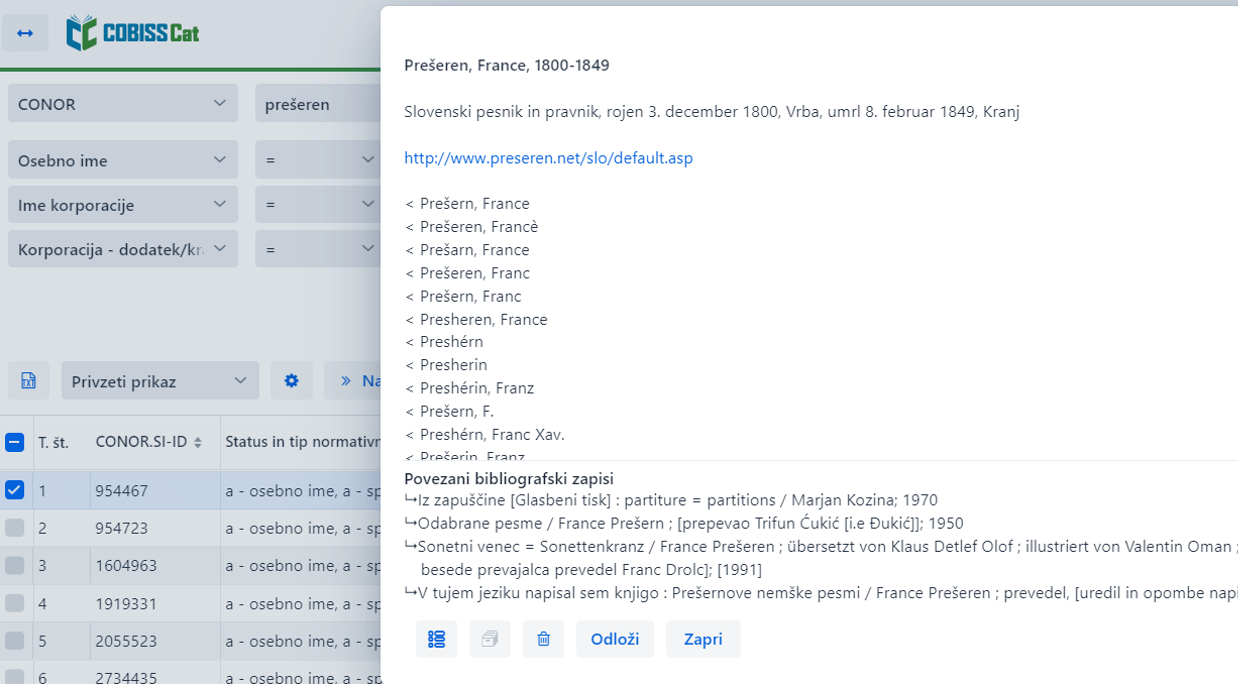
Authority control is an important part of cataloguing. The Slovene CONOR.SI authority file including authority records for individual and corporate authors, enables among others identification of authors. The purpose of the research was to find out cataloguers’ opinions on its usefulness, its advantages and disadvantages, and how creating authority records for corporate authors was practised. The survey was conducted as an online questionnaire and interview, 73 cataloguers from academic libraries participated. The results showed that the majority of surveyed cataloguers were satisfied with CONOR.SI.
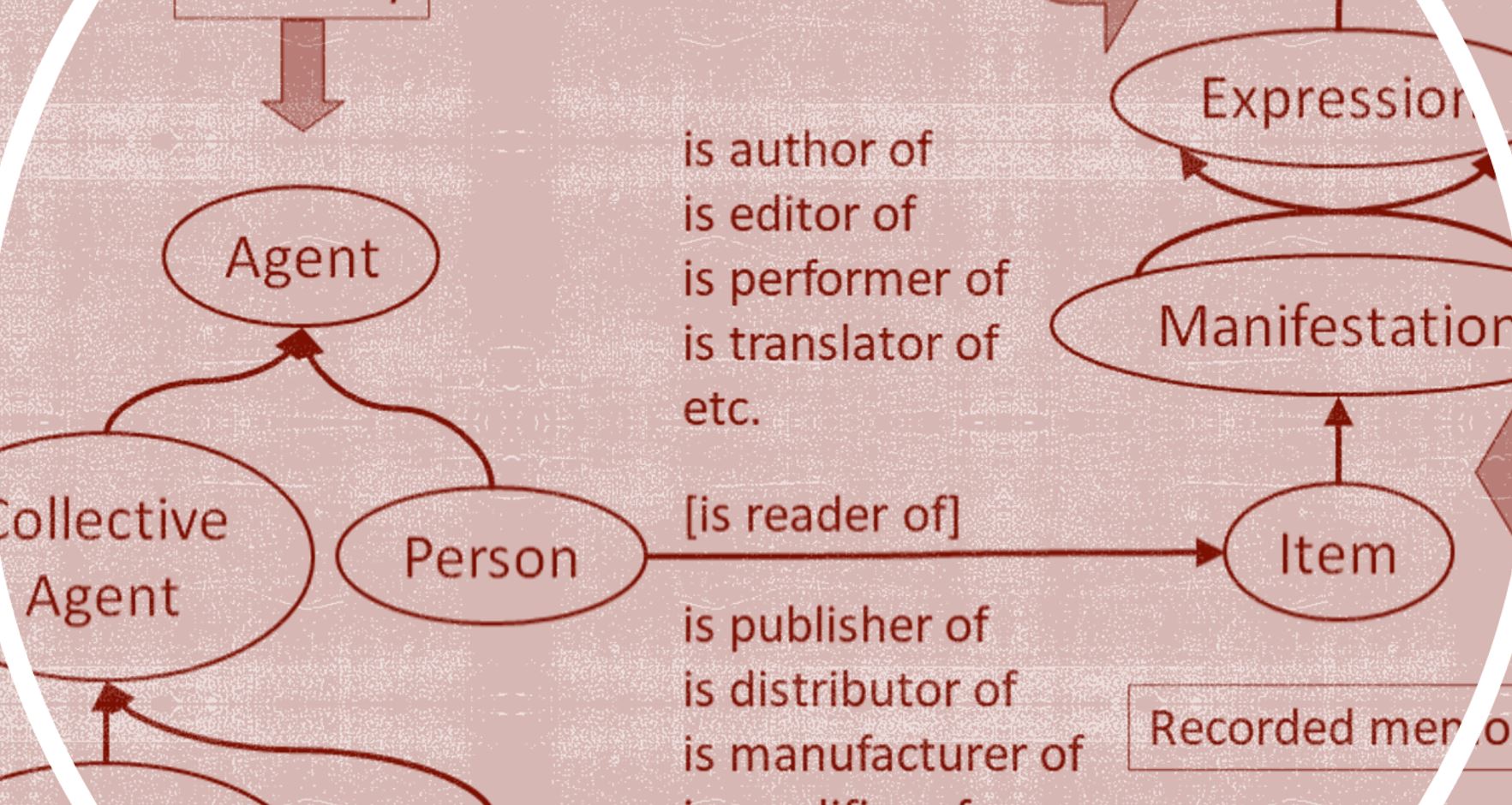
The Fifth Information Age is characterised by the ubiquitous recording of social transactions in an explosion of persistent cultural memory. A person who contributes to social media is an agent who creates digital cultural artefacts. The internet of things, of personal devices for the capture, creation, transmission, and output of information means everyone is potentially an author, a publisher, a distributor, with a profound impact on traditional methods of authority control. The focus of authority control is shifting from the provision of a unique label for an individual person or group to the description of an individual as an instance of a class, as an entity.
The purpose of this paper is to offer additional help to cataloguers for more uniform and higher quality cataloguing of textual component parts, and at the same time to gather information about where cataloguers can get informed about novelties and changes in the cataloguing of textual component parts.
The paper describes and emphasizes the importance of authority control for personal names in the development of library catalogues. The introductory part of the paper presents a historical overview of the development of authority control in world librarianship, the most important library conferences that dealt with this topic, as well as the way authority control functions in the world and in library-information systems operating on the COBISS platform.
By introducing the IFLA Library Reference Model, the significance of authority control is constantly increasing as authority data will play a key role in the linked data network. Consequently, the preparation of authority data will help when implementing IFLA LRM and will prove useful during the transition to RDA (Resource Description and Access). The overview of authority data situation in the COBISS.net system with the focus on the Slovenian COBISS.SI system is presented.
The article presents in detail the data on the annual increment of bibliographic records in 2021 at annual and monthly levels. The analysis includes 177,705 bibliographic records created by 543 cataloguers. In the last quarter of the year, 28 % of bibliographic records were created. Most records, i.e. 1,015 records, were created on Tuesday, 9 February 2021, Tuesdays are also the most productive days in the year.
This article presents the current state of bibliographic transition in France, the approach and the organization that were applied to make library catalogues compatible with semantic web technologies and bibliographic data on the web. In order to achieve this goal, it is necessary to move to entity-based cataloguing built on the IFLA LRM model.
We use cookies to ensure that we give you the best experience on our website. If you continue to use this site we will assume that you are happy with it.