In the Republic of Serbia, 27 municipal libraries are authorised to carry out central library tasks together with the National Library of Serbia, the Library of Matica Srpska and the University Library Svetozar Marković from Belgrade. The total number of registered libraries in Serbia is 2,780. Their automation has been following the programme of the Serbian Library Information System Development. The co-operation with IZUM has existed since 1988, since 17 February 2003 the COBISS.SR system has been set up within the Virtual Library of Serbia. At present, the COBIB.SR Union Catalogue contains 1,565,000 records created by 43 active members of the system. Nevertheless, there are about ten different library software packages used by Serbian libraries. Additionally, the project is going on to digitise the materials held by National Library of Serbia. Open Society Fund, The EU Programme Tempus and above all IZUM have had an important role in providing the equipment for library automation in Serbia.
Hospital libraries are essential for providing professional information and help with professional work and research to healthcare staff and for supporting patients. Following IFLA recommendations and other standards, they are expected to offer access to information as well as activities that relax, entertain and aid the healing process. Reading during hospitalization can reduce stress, anxiety and depression, while promoting recovery.
Dobreknjige.si is an online platform designed for readers seeking high-quality fiction and non-fiction recommendations. As a national project of Slovenian public libraries, it helps users organize their reading and connect with fellow readers, and promotes a vibrant reading culture. The portal attracts over two million visits annually, with its popularity steadily increasing. After a decade of operation, a major upgrade became necessary due to outdated technology, limited development possibilities and the need to meet modern user expectations.
The paper describes the methodology of a study of reading habits and reading culture of librarians and library management in Slovenian libraries, which is a part of a broader survey in the project Reading role models: reading habits of professional staff in kindergartens, schools and faculties and public libraries – i.e. a study of all professionals involved in and influencing reading literacy and reading culture, as well as of students for these professions.
Kranj City Library is the central regional library, which, among other things, implements programs for reading literacy, information literacy, lifelong learning and intergenerational cooperation. In this context, we joined the international project Libraries of Emotions with the aim of introducing an innovative reading promotion service. In the paper, the project and the process of implementing practical content were presented.
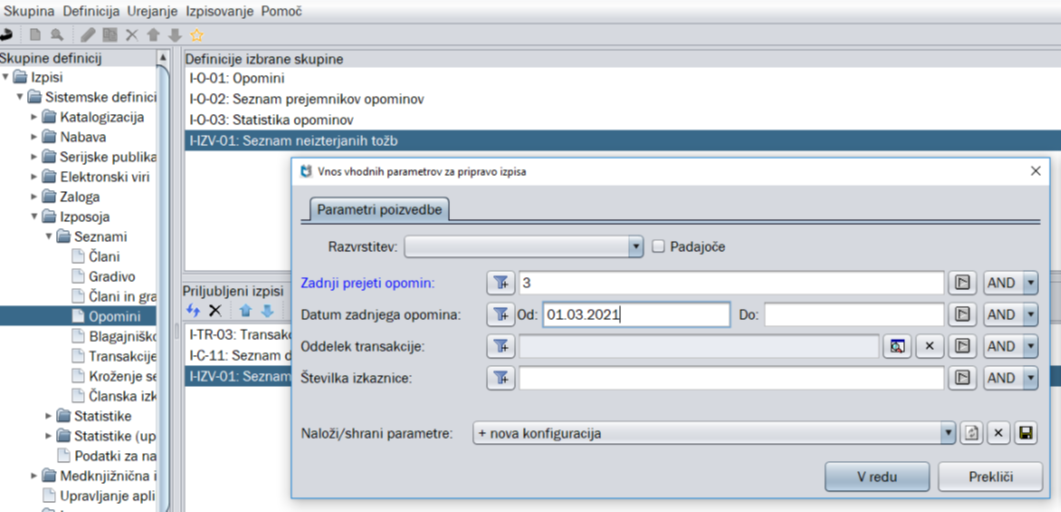
Kranj City Library is one of the largest Slovenian public libraries, which, like most Slovenian libraries, also deals with the debts of its users. Prohit Claims Management Agency helps us to collect the debts. Before collection by an external contractor, we first carry out a series of procedures in the library to collect the debts ourselves. We regularly monitor the debts of library users and inform them about their debts.
Foreign research reports low use of mobile devices for reading e-texts among students, so we investigated mobile reading behaviour among UL students. Since the results of the online survey showed that low use of mobile devices for reading e-texts is also characteristic of UL students, we wanted to investigate in more detail the reasons and barriers to the use of mobile devices for reading e-texts.
Participation in professional events in the fields of reading literacy and reading culture has a positive impact on boosting professional self-confidence. The available data reflects the accessibility of professional events for the promotion of reading literacy and reading culture in Slovenia. Practitioners attend such training, but at the same time, they doubt their competence to encourage and plan the development of reading literacy and reading culture.
User experience is becoming an increasingly important aspect of the quality of services, products and even bibliographic information systems. Due to the lack of comprehensive research into user experience in bibliographic information systems, we developed a questionnaire, covering all key dimensions and aspects of user experience and taking into account the specificities of bibliographic information systems.
In 2019, the Public Library of Užice conducted a survey to assess the level of user knowledge of the search process in COBISS/OPAC (now COBISS+). The survey consisted of the following segments: user profile, most commonly used access points, use of screen tips and ease of searching, and user evaluation of the search results obtained.
In this paper we discuss the competencies of librarians and informatologists, terminological disagreements as well as attempts to investigate the various paths of influence on academic education in the field of Information sciences.
We use cookies to ensure that we give you the best experience on our website. If you continue to use this site we will assume that you are happy with it.