The article is dealing with the issue, what are the reasons that bibliometrics has appeared in the second half of 20th century as additional element in R&D evaluations (along peer review which has longer historical tradition). The authors of this article try to analyse the state of the art and the development of quantitative and qualitative R&D evaluations in different part of the world. They give special attention to the functioning of R&D evaluation system in the new mode of knowledge production. In the article, the key interest is oriented to the criteria of validity and certainty in R&D evaluation procedures. In the last part of the article, there are elaborated some recommendations to improve the system of R&D evaluation established in the last few months by Slovenian Research Agency (ARRS).
In the spring of 2025, the Slovenian Research and Innovation Agency (ARIS) conducted a survey on the implementation of open science principles, to obtain the data to assess the enforcement of open science in the practices of research organizations in 2024.
The basis for the analysis of scientific and similar monographs (academic books) in Slovenia in the period from 2013 to 2023 were bibliographic records in the COBIB.SI database that contain also information on the type of scientific publication (for less than half of the records verified). During this period, an average of 520 to 1245 monographs were published annually (depending on which types of works are counted as academic books and how reissues, such as reprints, new editions and e-books, are treated).
The paper presents the contributions of participants at the consultation on scientific and professional publications on e-journals at the beginning of the 1990s, which was organised at the Institute of Information Science (IZUM) in Maribor in December 1991. The emphasis is also placed on IZUM's e-bulletin, which was entered into one of the first directories of e-journals and other e-bulletins worldwide from the same year. Communication is the essence of scientific progress, particularly e-journals.
The article presents upgrades and features of the new SICRIS application version, based on updated trasfer of data from ARRS, migration to open source environment and updated web services. In 2022, the project of migration from the Windows platform (MS SQL, ASP.NET, IIS) to the Linux platform (PostgreSQL, Java EE, Wildfly) was completed.
Based on (1) the lists of Slovenian scientific journals in international databases used to evaluate publications by Slovenian researchers, (2) regular government calls for support of scientific journals, and (3) a more detailed review of the main international bibliographic databases for this system (SNIP, JCR, SJR), we can conclude that 219 Slovenian journals with scientific articles were published in 2021. Every second journal was founded after 1990, and about 60% of them belong to social sciences and humanities. Their publishers are Slovenian institutions and the journals are diamond journals: only 7.7% of journals are affiliated with major global publishers and only 3.7% use APC (Article Processing Charge).
Wisdom is one of many human mental capabilities. Mental vitality is stereotypically associated with youth and mental decline with old age. However, also aging is a price of wisdom. The connection between neurological decline (senility, dementias) and wisdom development during aging is referred to as the paradox of wisdom.
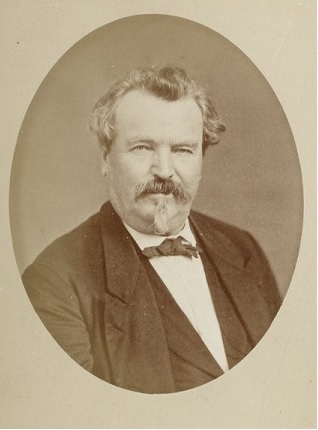
The literature review is an integral part of research. The story of Pierre Trémaux (1818–1895) illustrates how factors, such as hoaxes, fabrications, untrue stories, myths and prejudice, which have nothing to do in science, difficulties in comprehending and accepting new scientific paradigms and also slow and geographically limited dissemination of scientific findings, which results in not being familiar with scientific findings and discoveries elsewhere in the world, are harmful for the ecology of scientific communication.
The open access as a new bussiness model in scientific communication can have an impact on citations of scientific publications, which has been researched a lot. This article presents an analysis of the echo time, which indicates the period from publishing an article to the time of its first citation. The analysis of the echo time was made in two phases.
ZUM developed the COBISS/SciMet portal to monitor scientific publications and to evaluate publications published by Slovenian authors. The methodology of collecting, aggregating and processing data on Slovenian authors obtained from different information resources, e.g. WoS, Scopus, COBISS.SI, SICRIS, SNIP and JCR is described. The options of data display within the portal and the functionalities of the portal are presented. A new framework used for developing the COBISS/SciMet web application is presented.
Academic and research libraries/librarians were always important partners to the scientific research community. As a result of developments in scholarly communication, information resources availability in electronic form, networks and national research policies librarians are challenged to find new ways to engage with research communities.
We use cookies to ensure that we give you the best experience on our website. If you continue to use this site we will assume that you are happy with it.